

Devontez Walker Has Earned More Opportunities, and the Ravens Have Every Reason to Give Them to Him
With Baltimore’s season slipping away, the explosive young receiver represents exactly the kind of talent the Ravens should be investing in down the stretch.
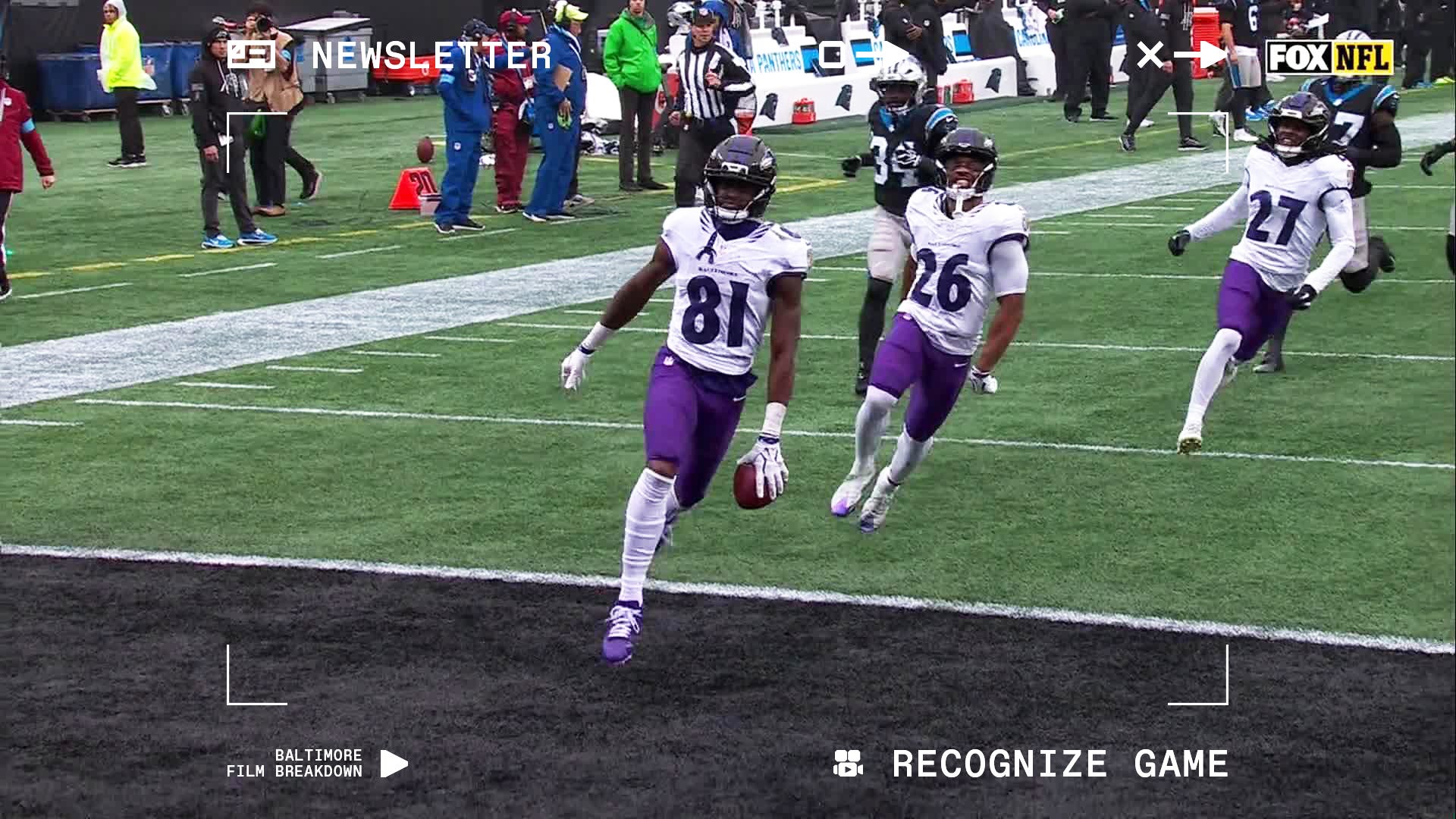
For a team desperately searching for a spark, sometimes the answer is already on the roster. Devontez Walker has made a compelling case for more opportunities in Baltimore’s offense, and his latest contribution only strengthens that argument. After being inserted into the kick return unit on Sunday, Walker immediately took his first opportunity to the house, showcasing the kind of explosive athleticism that made him an intriguing developmental prospect in the first place. It was an electrifying play, and more importantly, it was another example of a player making the most of limited opportunities.
Walker’s contributions extend well beyond the occasional explosive play. He’s demonstrated a willingness to embrace the physical side of football, showing legitimate effort and effectiveness as a blocker in the running game while bringing that same mentality to his special teams responsibilities. His combination of size, physicality, and effort gives Baltimore a player capable of contributing even when the football isn’t coming his way.
At 4-7, with the Ravens’ postseason hopes hanging by a thread, Walker represents a microcosm of what this organization should be prioritizing moving forward: identifying young talent, allowing it to develop through meaningful game experience, and determining which players can become legitimate contributors beyond this season.
A Developmental Prospect With Undeniable Tools
When Baltimore selected Walker in the middle rounds of the NFL Draft, it was always going to be a projection based more on athletic upside than polish. A relatively late bloomer in football, Walker entered the league with just one full season of Power Five experience. His résumé was limited, though his physical gifts were anything but.
With a long frame, impressive straight-line speed, and legitimate explosiveness, Walker possesses many of the same physical characteristics that make Green Bay Packers receiver Christian Watson such an intriguing weapon. The comparison isn’t necessarily about their respective levels of development or production. Rather, it’s about the athletic profile and the ways those physical tools can stress opposing defenses.
What makes Walker particularly intriguing is that his tools aren’t limited to running past defenders. He’s shown an appetite for contact, an ability to engage defenders as a run blocker, and the effort necessary to make an impact in the less glamorous aspects of the position. For an offense built around a physical running game, those qualities shouldn’t be overlooked.


While Walker hasn’t received consistent offensive opportunities, the flashes have been difficult to ignore. In a relatively small sample size, he’s demonstrated an encouraging rate of success when targeted or incorporated into the passing game. His ability to threaten defenses vertically, work across the field on crossing concepts, and generate explosive plays makes him an intriguing option in an offense that could certainly use more juice. The question isn’t whether Walker has the physical tools to contribute. It’s whether Baltimore is willing to give him enough opportunities to develop everything else.
The Missing Polish and Why Repetitions Matter
To be clear, Walker remains an unfinished product. One of the more noticeable deficiencies in his game has been his ability to recognize and settle into soft spots against zone coverage, particularly on static routes that require him to work back toward the quarterback. These are the finer details that separate an athletic receiver from a consistently dependable NFL target.
Being quarterback-friendly involves more than simply getting open. It requires understanding coverage leverage, recognizing how defenders are distributing themselves, and presenting a reliable throwing window at the appropriate moment. That’s an area where Walker needs continued refinement.
There is, however, an important distinction between identifying a developmental weakness and allowing that weakness to permanently limit a player’s opportunities. Some lessons are difficult to replicate on a practice field. The timing, spacing, and processing required to succeed against NFL defenses are developed through live repetitions. Giving Walker more routes in meaningful game situations would allow him to put those experiences on film, identify mistakes, and refine his approach throughout the remainder of the season. For a player whose developmental timeline already differs from that of a traditional prospect, those opportunities are especially valuable.
Baltimore’s Bigger Picture Has Changed
At 4-7, the Ravens are rapidly approaching a point where their focus needs to extend beyond the immediate playoff picture. A miraculous turnaround isn’t entirely impossible. Baltimore could theoretically make a run, beginning with a victory over Houston, while hoping Cleveland stumbles down the stretch. Relying on that scenario, however, would be an increasingly difficult proposition.
Regardless of whether the Ravens remain mathematically alive, there is little reason to believe that expanding Walker’s role would come at the expense of their ability to win football games. If anything, it could provide an immediate benefit. Walker brings legitimate vertical speed, size, and physicality to the receiving corps, and his willingness to block and contribute on special teams provides additional value within Baltimore’s offensive identity. Combine those traits with his demonstrated playmaking ability, and the argument for getting him onto the field becomes even stronger.
This isn’t about handing out snaps simply because a player was drafted. It’s about rewarding production and effort with opportunity.
Special Teams Production Should Open Doors
There’s a fundamental principle that applies across virtually every level of football: when a young player consistently makes an impact on special teams, that performance should create opportunities for a larger role on offense or defense. Walker has now provided Baltimore with a particularly emphatic reminder of that principle.
His kickoff return touchdown wasn’t merely a showcase of speed. It demonstrated decisiveness, explosiveness, and an ability to capitalize when his number was called. His contributions on special teams also speak to his willingness to do the dirty work, as the same physicality and competitive effort that make him an effective blocker are evident in his approach to the game’s third phase.
Those qualities translate. Success on special teams doesn’t automatically make someone a polished receiver, though it should encourage a coaching staff to explore whether that playmaking ability can be harnessed elsewhere. Walker has earned that exploration.
The Clock Is Already Ticking
There’s another element to this conversation that shouldn’t be overlooked: Walker’s developmental window. Compared with younger receivers such as Jacoby Lane and Surratt, Walker is further along in age, with his rookie contract also approaching its conclusion sooner. That creates a degree of urgency. Baltimore needs to determine what it has in Walker before reaching the point where contractual decisions become unavoidable.
Is he simply a gifted athlete capable of producing occasional explosive plays? Or is there a legitimate NFL receiver waiting to emerge with more consistent opportunities? The Ravens aren’t going to answer that question by keeping him on the sideline. They need to see him run routes, execute assignments, make mistakes, correct those mistakes, and build chemistry with the quarterback. They need a larger sample size, and perhaps most importantly, they need to find out whether his undeniable athletic upside can translate into sustainable offensive production.
It’s Time to Find Out What Walker Can Be
The Ravens don’t need to completely reinvent their offense to accommodate Walker. They don’t need to force-feed him targets or manufacture an unrealistic workload. They simply need to give him a legitimate opportunity to contribute. That means incorporating him into more offensive packages, allowing him to threaten defenses vertically, utilizing his frame and physicality in the running game, and giving him the live repetitions necessary to develop as a complete receiver.
His limitations are real, though so is his upside. For a player who continues to demonstrate explosiveness, effort, and an ability to capitalize on limited chances, the potential reward far outweighs the risk of giving him additional snaps. Baltimore has spent a mid-round draft pick developing Walker into an NFL player, and now it’s time to find out what that investment can become.
Whether the Ravens somehow salvage their season or begin looking toward the future, one thing is increasingly clear: Devontez Walker has earned more opportunities, and the Ravens should give them to him.